Who let the flood rush toward the people? The human-caused truth behind the Hengzhou, Guangxi dam breach

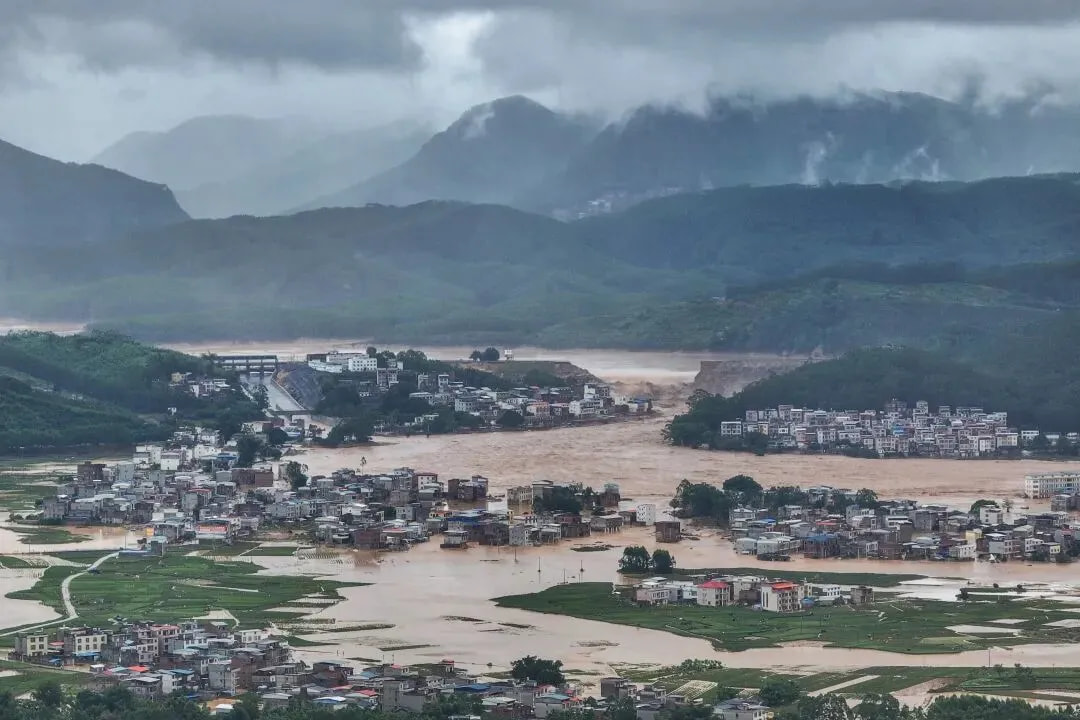
News of the July 6 flood in Nanning shook the whole country. On the morning of July 6, a major breach appeared in a section of the dam at Liulan Reservoir, the largest medium-sized reservoir in Hengzhou, Nanning. Water surged through the breach and burst the embankment, pouring downstream toward villages and buildings. Liulan Reservoir was built in 1958 and completed in 1960, making it about 66 years old; the dam is 42 meters high, with a total storage capacity of 95.52 million cubic meters, mainly used for hydropower generation, farmland irrigation, and drinking water supply. As of now, at least 6 people have died, 11 are missing, 375,000 have been affected, and 130,000 people have been urgently evacuated and resettled.

Typhoon “Maysak” brought extreme rainfall. Typhoon “Maysak” entered Dongxing City, Fangchenggang, Guangxi, from eastern Quảng Ninh Province, Vietnam, at around 3 a.m. on July 5, then moved north-northeastward into the interior of Guangxi.. Maysak brought torrential rain to Hengzhou: 565.0 mm in Shitang Town over 24 hours, 445.0 mm in Taowu Town, and 411.5 mm in Xiaoyi Town. The catchment area of Liulan Reservoir is 195 square kilometers, or 195 million square meters. Based on Shitang Town’s 565 mm rainfall, the total rainfall volume across the entire basin in 24 hours exceeded 110 million cubic meters.

But the collapse of Liulan Reservoir was entirely man-made. Reservoir engineering is a weapon for flood control and water storage, and reservoirs themselves carry the responsibility of flood prevention. During the socialist period, after a reservoir was completed, it was required that a management organization be established or a dedicated person be assigned to manage it; during the flood season, a flood-control organization had to be established or a dedicated person assigned to be responsible for flood prevention. In addition, flood prevention required the organization of a strong flood-control team; furthermore, it required the organization of a strong flood-control team, with the backbone formed by the basic militia of the people’s commune near the reservoir, while also recruiting young and middle-aged commune members to participate; during the flood season, flood-control equipment had to be prepared in advance, and the principles of relying on the masses, using local materials, and self-reliance had to be carried out in the provision of such equipment.

Socialist China specifically required that work be inspected well before the flood season, problems found be resolved in time, and the necessary protective measures be arranged. But because the Chinese revisionists are a regime of bureaucratic monopoly capitalist dictatorship, these people simply do not care whether the people live or die; even if a flood disaster happens, they can still run off somewhere else to eat, drink, and enjoy themselves. Originally, the reservoir should have long since undergone flood calculations, and various hidden dangers should have been investigated before the flood season, such as settlement, displacement, seepage volume, scouring, cracks, and leakage in the project. But the Chinese revisionists did not do this work. Instead, they even took the opportunity of “repairing” the Liulan Dam to embezzle a large sum of reservoir repair funds.

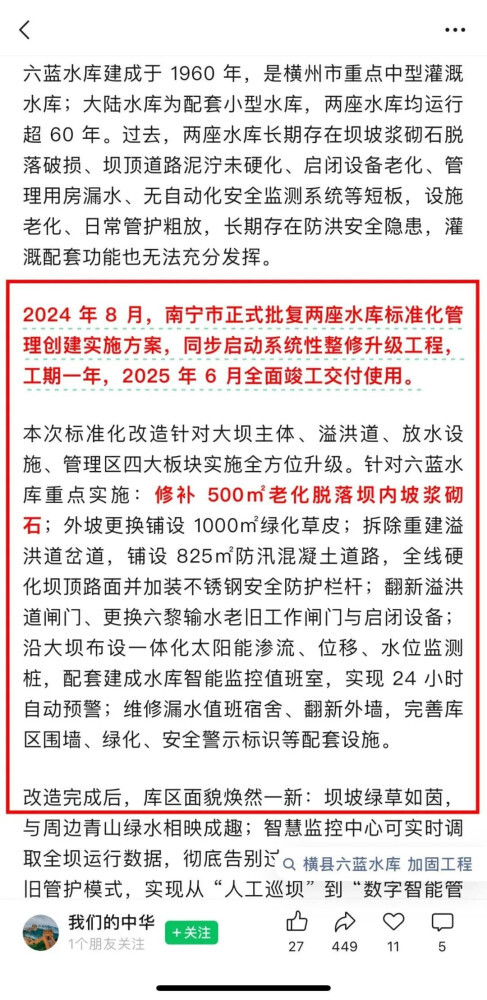
In August 2024, Nanning officially approved the implementation plan for standardized management and creation for Liulan Reservoir and Dadong Reservoir, and simultaneously launched a systematic renovation and upgrading project with a one-year construction period, scheduled for full completion and handover in June 2025. On June 25, 2025, reporters also visited Liulan Reservoir and Dadong Reservoir in Hengzhou, where the fresh scene after the completion of standardized construction was striking: the leveled and hardened road atop the dam extended into the distance, neatly arranged and prominently visible safety signs stood in order, intelligent monitoring equipment operated in an orderly manner, and a new water conservancy landscape combining safety and aesthetics gradually unfolded.

An image of a screenshot of the “Liulan Reservoir Hazard Removal and Reinforcement Project Tender Announcement” also circulated online. The screenshot shows a total tender budget of 73.62 million yuan, designed for a once-in-a-century flood.

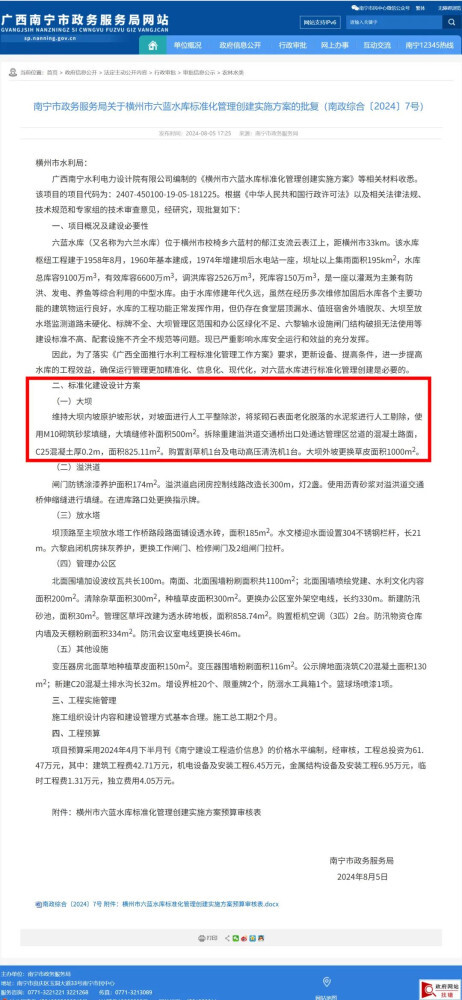
On the Nanning government services website, the Chinese revisionists used verbose language to say that these more than 70 million yuan were, in fact, just used to fill a gap.

In fact, Hengzhou spent more than 300 million yuan between 2023 and 2025 to “construct and repair” Liulan Reservoir. After only a year, this dam, which had cost more than 300 million yuan to repair, simply collapsed, and the surging floodwaters inundated the homes of hundreds of thousands of people in Hengzhou.

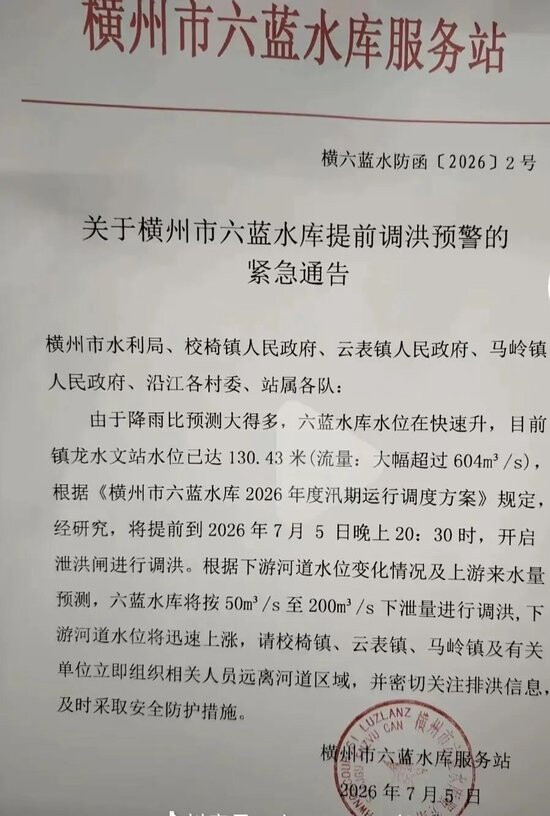
Not only did the Chinese revisionists fail to carry out any repairs or take any safety measures before the flood season, they also did nothing to promptly calculate the reservoir’s flood-control capacity once the torrential rain was already pouring down. Instead, they kept delaying the matter of opening the sluice gates to release floodwater. On July 5, the reservoir service station first announced that the gates would be opened at 22:00 that night to regulate the flood, and then, because “the rainfall was much greater than forecast,” moved the opening up to 20:30.

In the early hours of July 6, the Liulan Reservoir service station issued an urgent notice warning of flood discharge through the fully opened No. 4 sluice gate, stating that due to a sharp increase in rainfall runoff, the reservoir water level was rising rapidly. At 02:30 on July 6, the water level of Liulan Reservoir reached 111.20 meters, 0.91 meters above the design flood level and below the checked flood level. Under such an emergency situation, the person in charge of Liulan Reservoir actually set the time for fully opening the flood gates for discharge at 6:00 a.m. on July 6. Around 10:20 a.m., two breaches about 50 meters wide appeared in the dam body, causing an overtopping dam failure and a large amount of floodwater to rush downstream. Around 11:00 a.m., the dam body at the scene had already suffered two collapses, with massive floodwaters surging downstream. In such a severe situation, it was not until 11:30 a.m. that Nanning upgraded its flood-control response from Level III to Level I.

A resident downstream from Liulan Reservoir interviewed by Red Star News said they received a flood discharge warning the night before, but when they woke up in the morning, the first floor of their home was already flooded. Around 9:00 a.m., they received a call from the village committee telling all residents to evacuate immediately to higher ground upstream. The Beijing News interviewed relatives of residents in Liulan Village, who said that after 9:00 a.m. on July 6, Liulan Reservoir notified them that water would be released through the sluice gates. Some villagers had already gone up the mountain for temporary resettlement, but many people still could not evacuate in time. The same report also said that in Nankang Village, about 8 kilometers from the reservoir, floodwaters had already reached the village entrance around 7:30 a.m.; an hour later, the water entered the village and the first floor was flooded.

The problem is that Liulan Reservoir had already exceeded the design flood level at 2:30 a.m. on July 6, and the sluice gates were fully opened at 6:00 a.m. to discharge floodwater, but many downstream residents did not receive emergency evacuation notices until around 9:00 a.m.; by around 10:20 a.m., breaches had already appeared in the dam. The effective time left for evacuation was extremely short, and many people had no time to get out before the floodwaters had already risen above the first floor.

20 Likes

The fact of the Liulan Reservoir dam breach has already torn away the fig leaf of the so-called “natural disaster.” Heavy rain was, of course, a natural condition, but why were hidden dangers not eliminated before the flood season? Why, after spending huge sums on “repairs” and “construction,” did the dam body still fail so quickly in the face of the flood? Why, by dawn, when the flood level had already exceeded the design flood level, was the highest danger signal not immediately conveyed to every village and every household downstream? Why, when the flood had already entered the village in the morning, did many residents not receive the emergency evacuation notice until around 9 o’clock? Why, when the reservoir was already in a serious emergency and people’s lives were under direct threat, did Nanning’s flood-control response not get raised to Level One until 11:30 a.m.? These questions cannot be answered by the words “the rain was too heavy.”

Reservoirs were originally engineering projects built by the people for flood control, water storage, irrigation, and power generation. Their existence was meant to protect downstream residents, reduce flood damage, and safeguard agricultural production and people’s livelihoods. But in the hands of the bureaucratic monopoly bourgeoisie of the revisionists, reservoirs have instead become ticking time bombs hanging over the people’s heads. In ordinary times, they can serve as a showcase for local bureaucrats to flaunt “political achievements,” “standardized construction,” and “smart water management”; they can be a link in the chain of interests in engineering contracts, fiscal appropriations, bidding and procurement, and layer upon layer of subcontracting; they can be material for polishing their image in propaganda reports. But when a real flood arrives, these gaudy placards, brand-new roads, and so-called intelligent devices cannot stop a breach, cannot save the people, and cannot stop the floodwaters from rushing toward the people’s homes and fields.

This fully shows that the revisionists’ so-called “water conservancy construction” is by no means the water conservancy construction of the socialist period, which relied on the masses, served the masses, and protected the masses, but rather engineering transactions and administrative performance under bureaucratic capitalism. Socialist reservoir management requires pre-flood inspections, on-duty vigilance during flood season, mass mobilization, hazard forecasting, material preparation, and organized teams; it requires putting the protection of people’s lives and property first. But the revisionists’ reservoir management, on the surface, has complete documents, complete systems, complete signage, and complete project acceptance, yet when floodwaters truly arrive, it exposes the hollowing out of engineering safety, the sluggishness of dispatch decisions, the bureaucratization of warning transmission, and the passivity of mass evacuation.

It is not that they lack modern technology, not that they lack weather forecasts, not that they lack hydrological monitoring, and not that they lack emergency plans, let alone that they lack fiscal funds. On the contrary, today’s revisionists have satellites, radar, automatic monitoring systems, flood-control command bodies at every level, and an entire administrative machine from the center to the localities. But in China after capitalist restoration, these things are used first not to mobilize and protect the masses, but to maintain bureaucratic rule, decorate political achievements, and pursue profits. Who controls the technology, and which class the system serves, are the fundamental issues. Technology itself cannot automatically protect the people; only when power truly belongs to the people, when the means of production truly belong to the people, and when the state machine truly serves the people’s interests, will technology become a force for protecting the masses. Conversely, under the dictatorship of the bureaucratic monopoly bourgeoisie, no matter how advanced the equipment is, it will be stuffed into a rotten bureaucratic system and turned into a mere prop, a tool for window dressing.

The breach of Liulan Reservoir is not an isolated technical accident, but a concentrated exposure of the decay of the entire disaster-prevention system under revisionist rule. Projects can be repaired with money, reports can be written beautifully, acceptance can pass at every level, and the media can produce images combining “safety and aesthetics”; but whether the people were actually evacuated in advance, whether the reservoir could withstand the flood peak, whether the danger was made public immediately, and whether cadres truly stood guard in the most dangerous places—these life-and-death questions are pushed aside. When the flood truly surges down, bureaucratic paper safety is washed away without a trace, and all that remains is the lives, homes, crops, and homeland of the people bearing the consequences for them.

Therefore, the breach of Liulan Reservoir cannot be described as a purely natural disaster. The typhoon brought heavy rain, but heavy rain does not inevitably lead to such a tragedy; rising floodwaters are a natural phenomenon, but the reservoir’s failure, delayed pre-release, sluggish evacuation, and passive response are all the result of the social system and bureaucratic rule. The revisionists took over the water conservancy projects built by the people through their own efforts during the socialist period, but they did not truly inherit the socialist mass line and people-centered stance; they only inherited the aspect of the projects that could be exploited for profit and political achievements. As a result, the reservoir that should have protected the people became a dangerous object threatening the people in their hands; the flood-control system that should have served the people became a bureaucratic machine for post-disaster relief, post-disaster propaganda, and post-disaster blame-shifting.

This breach did not just collapse a section of the Liulan Reservoir dam; it also collapsed the revisionists’ hypocritical banner of “the people first” and “life first.” What the people need is not a few cheap words of condolence after the disaster, not a rescue posture in front of the media cameras, and certainly not the shameless excuse of blaming everything on “extreme weather.” What the people want to ask is: Where did the money go? Why did the dam collapse? Who was responsible for the pre-flood inspection? Who was responsible for coordinating the flood discharge? Who was responsible for notifying evacuation? Who was responsible for the project acceptance? And who should bear responsibility for the dead, the missing, and the hundreds of thousands of affected residents?

The breach of Liulan Reservoir was man-made. It shows that under the rule of the revisionist bureaucratic monopoly bourgeoisie, the safety of the people’s lives will always have to give way to bureaucratic political achievements, capitalist interests, and administrative cover-ups. Today it is Liulan Reservoir; tomorrow it may be another reservoir, another embankment, another mine, another factory, another city. As long as this reactionary regime continues to exclude the people from real management and supervision, as long as the state machine remains in the hands of the bureaucratic bourgeoisie, and as long as engineering construction continues to become a place for capital and bureaucrats to divide the spoils, such “man-made disasters” will not stop.

What can truly prevent flood disasters is not just concrete, steel bars, gates, and monitoring instruments, but the people’s genuine control over social production and public works, the mass line under the socialist system, and proletarian power that puts people’s lives above all interests. The flood from Liulan Reservoir has already receded, but the problems it left behind will not recede. We must expose the man-made disaster behind this catastrophe, expose the crimes of the revisionist bureaucratic monopoly bourgeoisie, and expose the truth of class rule hidden under the guise of “natural disaster.”

18 Likes

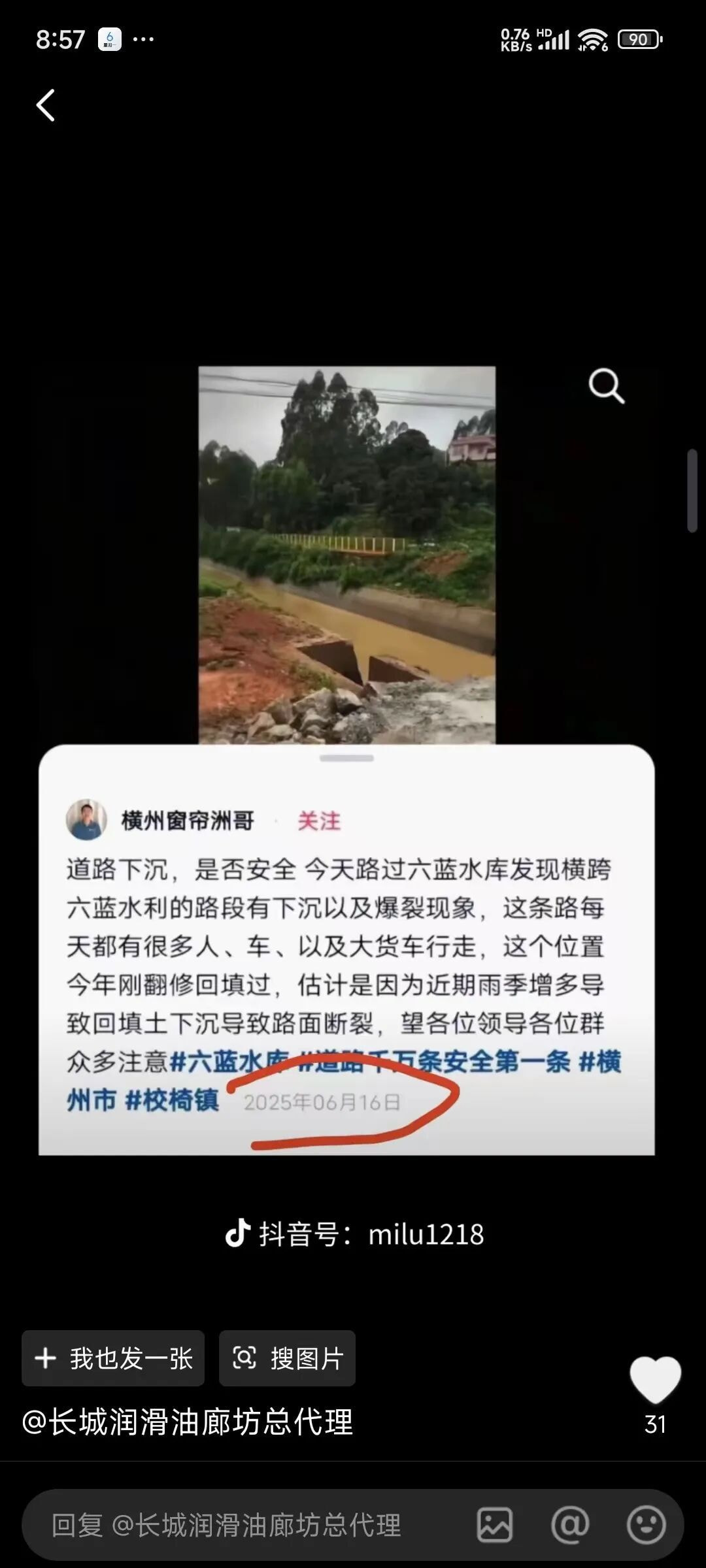
A year ago there had already been cracking and subsidence in the road surface, and it just so happened to be the very month when the so-called completion and handover took place. Moreover, this so-called renovation and upgrade didn’t even involve the dam itself — it was all just the surrounding turf, roads, and buildings.

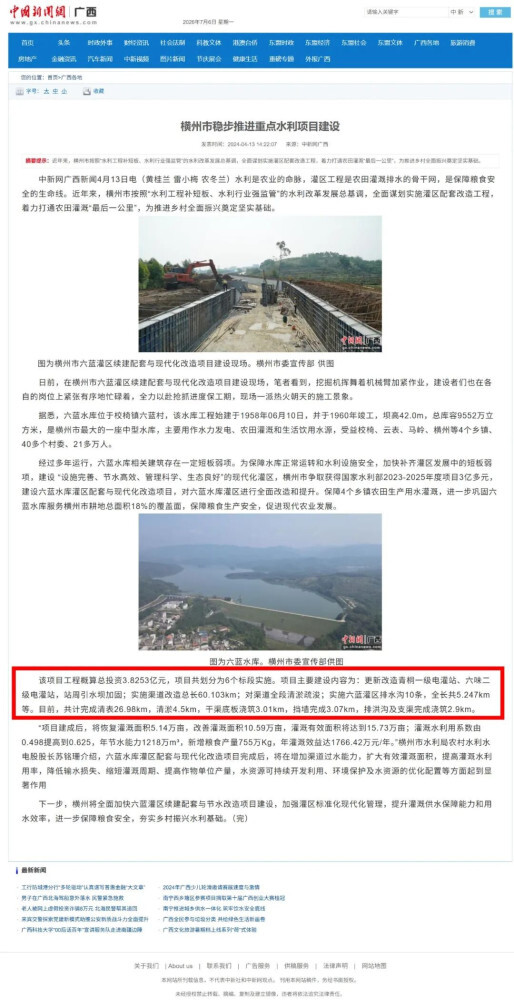
And that 73.62 million yuan was still the cost of the reinforcement project back in 2009. This time, the total investment of 382.53 million yuan for the „Liulan Irrigation District Continued Construction, Supporting Facilities, and Modernization Renovation Project“ is mainly for upgrading the electric irrigation stations, reinforcing the water diversion dam at the station, and dredging and renovating more than 60 kilometers of canals. In other words, the „main dam“ of Liulan Reservoir, built in 1958 and truly responsible for the core flood-retention function, is not included in this renovation scope. When tens of millions of cubic meters of floodwater surge in, what is still being forced to hold is that original homogeneous earth dam, which has been in operation for 66 years.

11 Likes

It seems that after the reservoir dam burst, some people were still spewing nonsense, saying the reservoir was built during the Great Leap Forward and pinning the responsibility for the disaster on socialist China. It’s really shameless :enraged_face:

14 Likes