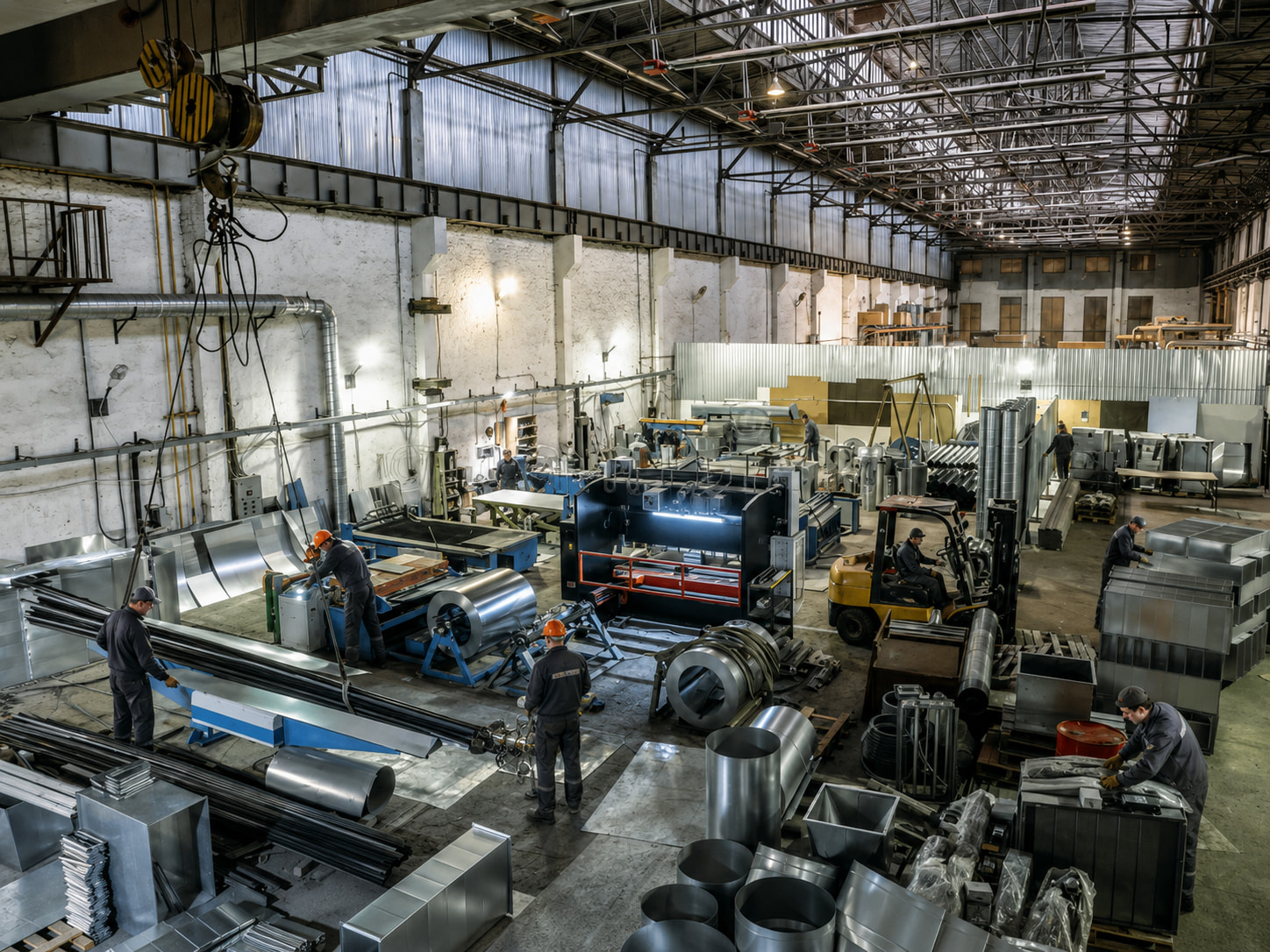
Recently, I have been working in a factory. I have come to realize that in the factory, on the one hand, one must carry out revolutionary work, and on the other hand, one must transform one’s own thinking as soon as possible and become an intellectual useful to the revolution. I feel that I should post every day about my own thoughts and feelings, as well as my interactions with the workers, for everyone’s criticism and discussion. In addition, as world war draws ever closer, the importance of propaganda work is becoming increasingly apparent. I should make some attempts at promoting Marxism and provide everyone with some lessons and experience.
7.3
This morning, when I went to the factory, I learned that the section supervisor was going to transfer me. For the past few days I had been working on the automatic machine that was still being debugged. I often slacked off and looked at my phone, and I also failed to study some of the technical skills properly. Upper-level management saw it on the surveillance footage. Since the factory workers are relatively strong as a force, even if the section supervisor or team leader saw it, they would at most complain a few times and would not really do anything, but they still transferred me to the manual machine. Slacking off at work really doesn’t seem like a big problem. On the one hand, I’m paid a fixed wage, so whether I work more or less makes no difference to me; on the other hand, if I work more, the capitalist’s profit increases, and then they can expand production to exploit other workers. But I also have my own problems: I didn’t study technical skills well, and when I was on my phone slacking off I didn’t ask the experienced workers for advice either. Although factories rarely fire people, this risk still can’t be ruled out completely, and besides, I might very well have my bonus docked. Employment is so bad right now that if I really were fired, I would have no source of income. It seems like I don’t even take unemployment seriously, which is very reactionary, because I feel like I can still return to my old parasitic life, like I have a backup plan. Under the capitalist system, there is freedom only for the exploiting class, not for the exploited class. My own choice to live parasitically comes from my family’s reactionary class stance. My parents are both capitalist roaders, and their comfortable life is built on countless workers in factories being subjected to strict discipline, working twelve-hour shifts in two shifts, and constantly enduring the insults and abuse of line leaders and managers. In the final analysis, no one should be living that kind of life. I should care about my work and my wages like a true proletarian.
In the morning I followed the master worker around; in the afternoon I was assigned to do odd jobs. While doing miscellaneous work, I talked with two coworkers and one experienced worker. They were all newly hired employees from Anhui, around 25 years old, who had come together to work in this area. First we talked about wages: the first month’s pay was really too little, maybe just a little over 1,000 yuan. The master worker said it was basically just like being slaves. That was true. The capitalist buys labor power and binds us to the machines, as if we had become a part of the machine itself. The two coworkers joked, I’m not a slave — if you don’t want to come to the factory, then don’t come; nobody’s forcing you. But what other choice is there if you don’t go work in a factory? In capitalist society, workers only have the freedom to be exploited. However, because my own grasp of theory was only partial at the time, I wasn’t able to explain the reasoning clearly either. They said that if I didn’t want to be a worker, I could become a capitalist. Put money into the stock market; even if you buy government bonds with very low interest, around one-thousandth, putting in ten million yuan would still earn you ten thousand. One of them bluntly told me he wanted a life of working less and making more money. But does that mean they really pursue that kind of speculative, get-rich-quick life? Not necessarily. They have also resisted the capitalist lackeys before, even more than I have. Anyone who truly takes the speculative road would never do that.
During the break, an experienced worker from Henan came over to talk. He suffered a work injury at the factory and broke three ribs, and after going through the factory’s procedures for three months he still hadn’t received compensation. He and we cursed the factory, talking about how in the past experienced workers could make more than 10,000 yuan a month, with meal breaks starting half an hour earlier, nothing like now, where you work yourself to death for 12 hours and only get 7,000 or 8,000. Many young guys come here and leave in less than three months, and only a small number can stay and work for five or six months, because the factory conditions are simply too hellish. He also mentioned that there are lots of damn police officers specifically lurking in corners and nooks to fine people riding e-bikes. They don’t just regulate helmets, but also riding the wrong way and so on, and I guess they’ll control even more things in the future. Thinking about my hometown, there are also many cameras there. Once I saw a pole with more than 20 cameras mounted on it, which shocked me. Revisionism is truly insane, crazily sucking the wealth of the working people dry, stopping at nothing.
However, because I didn’t understand the factory and e-bike fines very well, I also didn’t put forward my own views from a Marxist standpoint. If I think back carefully, although I had a little bit of interaction with workers in the factory, I rarely brought up Marxism. This raises an important question: why do we need labor reform? For myself, and for any worker, in the factory we will either go down the spontaneous capitalist road or the road toward proletarianization. So my current goal is to learn the advanced ideas among workers, while broadly engaging in communication with workers, understanding their history so as to analyze their thinking, engaging in ideological struggle with them, and together taking the road of opposing capitalism. To achieve this goal, I should seriously study the works of Marx and Lenin, especially political economy. On the other hand, I need to abandon my past attitude of looking down on workers; otherwise it will be hard to communicate with them. Therefore, I need to use Marxism to reanalyze my own history. Only by clearly analyzing both sides of the contradiction can I help solve the problem. Also, I need to strengthen contact with everyone so that they can understand my situation in the factory and I don’t end up drifting away from the collective.
7.4
Today something happened, and to make sense of it I need to start from a few weeks ago.
When I first joined the company, I followed an old hand named Z. He’s from Henan, and he’s worked in the factory for almost 20 years, but now he can only make four or five thousand a month, while living in a room in this city with a monthly rent of 400. He’s a very good person, but for some reason he likes stock trading. His family has tried to persuade him many times, but he still does it. He says the money is earned by himself, so no one else has a right to tell him how to spend it. In bourgeois society, workers inevitably get stained by low tastes; among so many vulgar pleasures, there’s always one that suits you. Once I accidentally damaged a sensor by mishandling it, and he said it was fine, mistakes are normal. I said, then can you stop stock trading? At the time my tone was pretty harsh: on the one hand I felt like he was criticizing me, and on the other hand I thought he had lost too much money in stocks. According to him, he had lost more than nine thousand. But how should we actually look at this issue? A person’s class standpoint is not shown by what they think, but by what they practice. If I truly cared about him and really didn’t want him to trade stocks, I should have patiently reasoned with him, instead of saying something like that at a moment like that. That means I myself look down on workers. In the past, by separating myself from society, from labor, and from speculative practice, I thought I was something great just because I had read a few books. Chairman Mao said that the masses are the wisest, while we are often ridiculous. The reason I developed this kind of thought is that I wanted to become a bureaucrat. I’ll post a self-criticism about this issue soon.
So today I apologized to Z for this matter, saying that looking down on people like that was wrong, and I also explained the practical roots of that attitude. Z said I’m a very sincere person, and that talking with me doesn’t feel burdensome. After that, Z said I’m still young, and if I keep staying in the factory I won’t have a future. He advised me to learn a trade, or improve my educational credentials, and maybe I could even become general manager someday. I said that if I really did become general manager in the future, and thought back to how the master I followed when I was young spent most of his life in the factory while I sat there taking the money extracted from them, I’d really feel uneasy about it. Since it was time to eat, the topic didn’t get any further. After hearing all this, I felt pretty complicated. On the one hand, the master saying I was sincere made me feel quite guilty, because I haven’t been fully sincere in explaining many of my issues to the Party. On the other hand, I don’t understand why, as a victim of the capitalist system, he would still defend it. Under desperate capitalism, there’s no other way out besides speculation and climbing upward; maybe he really thinks this is good for me. I don’t know what comrades think.
Something else happened this morning too. The factory has what they call a 300-yuan full-attendance bonus, but the conditions are extremely harsh. Many workers, because of all kinds of accidental factors, failed to clock in and couldn’t get the bonus. In the break room, the workers argued with the supervisor. They were smiling while barely holding back their anger, but the supervisor acted as if it were perfectly reasonable. I was boiling inside, but I still didn’t take the workers’ side. I’m thinking about how to fight together with the workers over the full-attendance bonus. This clause exists to maintain the factory’s savage discipline and force workers to absolutely obey the capitalist system, docking their pay for even the slightest problem. It’s as if they’re saying: you dare to break discipline, huh? Then taste my power! But we also have to take safety into account, as well as whether this will cost us our jobs and how the factory will mess with us afterward. The language shouldn’t be too incendiary, but it still has to denounce the capitalist system.
8.2
I was working the entire time during my evening shift today, so I didn’t have much time to think about revolutionary matters. But I heard the other senior workers say that the manual line isn’t as exhausting: after finishing one batch of materials, you can take a short break. Maybe it’s because I’ve only just started and haven’t adapted to the pace yet. Still, I should ask the other experienced workers for advice and see how I can save some time to go on the forum, read books, or do some other revolutionary work. During the shift, the irritable senior worker told me to take off my headphones. I realized that wearing them really was inconsiderate—if he spoke to me, I could barely hear him. Besides, time is precious to workers; they live at a fast pace all the time. I had been annoyed with him before, but after thinking about this, I wasn’t as angry anymore. Still, I didn’t take the initiative to start talking with the other workers. When I clocked out and reported my work, two of them even took the initiative to check whether I had reported it correctly. While we were working, the others also reminded me whenever I had done something wrong here or there.
This made me think that labor itself is inherently social. Moreover, since the factory has a high organic composition of capital, workers have to divide the work and cooperate in order to complete the production process. These practical struggles in production, as well as their class struggle against the capitalists, lead them to care about other workers in their everyday lives, both at work and outside it. But as a student sent to work here, I don’t participate in labor in the same way, so I feel no need to interact with others. At the same time, I put myself above them, believing that I possess intellectual capital and looking down on workers and peasants. In practice, however, I’ve found that I really should humbly learn from and seek advice from workers. I see this as a sign of my lack of capital, and it leaves me feeling extremely frustrated. Why can’t I just treat people as equals? I’ll have to struggle against my hierarchical thinking for a long time to come. At work next week, I should ask the senior workers more about production, at the very least so I don’t cause them any trouble. I should also talk with them about their lives and encourage them to think about things from the perspective of class struggle. But at first I didn’t know what to talk about, so all I could do was make awkward small talk.